
Child Pugh Calculator
The Child-Pugh calculator allows you to sum up information about your patient with cirrhosis of the liver - both biochemical parameters as well as your observations. The Child-Pugh score classifies the patient into one of three categories, giving you a clue about the severity of the condition, prognosis and mortality. You will also find a note about the West Haven criteria on hepatic encephalopathy, part of the assessment. Although nowadays, for transplant purposes, we consider the MELD score superior (check the MELD calculator for more), the Child-Pugh score still remains a very obvious, intuitive scoring system for every clinician.
We try our best to make our s as precise and reliable as possible. However, this tool can never replace a professional doctor's assessment.
How to use the Child-Pugh calculator?
Child-Pugh calculator will calculate the points on its own; all you have to do is to fill in the required fields:
- Bilirubin - check the patient's last bilirubin measurement. You can enter the result in two units, so you don't have to worry about converting.
- Albumin - input the correct albumin range from the patient's last measurement.
- INR - choose the right INR range. In cirrhosis of the liver, this parameter can be severely high.
- Ascites - this is the parameter that requires subjective evaluation. Remember to take into consideration the treatment response.
- Hepatic encephalopathy grade - see the section below to read a detailed description of the grades.
The main purpose of the Child-Pugh score is to assess a patient with liver cirrhosis, but it is also used for liver cancer - e.g., in the Barcelona clinic liver cancer staging system.
Hepatic encephalopathy staging - West Haven criteria
One of the parameters assessed in the Child-Pugh score is the stage of hepatic encephalopathy. Encephalopathy means disease or disorder of the brain, and the adjective 'hepatic' indicates that a liver malfunction causes the condition. The primary phenomenon leading to hepatic encephalopathy is hyperammonemia, a very high concentration of the ammonia in the blood.
The West Haven criteria help us to determine which grade of encephalopathy the patient has:
Grade | Clinical findings |
|---|---|
Grade I | Confusion; anxiety or euphoria; altered sleep rhythm; problems with simple math problems |
Grade II | Personality change; inappropriate behavior; disorientation for a time; speech impairment; dyspraxia, asterixis |
Grade III | Gross disorientation; somnolence / semistupor; responsive only to strong stimuli; confusion |
Grade IV | Coma; unresponsive to stimuli |
Child-Pugh score interpretation
The points scored in Child-Pugh calculator assign the patient to the one of three categories, A, B, or C. The mildest form of the cirrhosis of the liver belongs to category A, while the worst and deadliest is the category C. You can also see what the typical survival rate of patients in particular category is.
Points | Class | Description | One-year survival | Two-year survival |
|---|---|---|---|---|
5-6 | A | Well-functioning liver | 100% | 85% |
7-9 | B | Significant functional compromise | 80% | 60% |
10-15 | C | Decompensation of the liver | 45% | 35% |
Besides the patient's state evaluation, the Child-Pugh score may be used to determine if major surgery is safe for the patient. Patients in class A are generally safe patients for elective surgery. Class B persons should first receive treatment to optimise their state. Major surgeries are contraindicated for patients group C.
If you want to know more about diseases of the liver, check also:
- Serum-ascites albumin gradient - SAAG calculator; and
- Non-alcoholic fatty liver disease - NAFLD fibrosis score calculator.
A note for the patient - what is cirrhosis of the liver?
This Child-Pugh calculator is designed to be used when a patient suffers from cirrhosis of the liver. Liver cirrhosis means pathological scarring of the liver tissue. Since healthy tissue (the liver cells are called hepatocytes) is replaced with scar tissue, the liver function slowly deteriorates. It isn't a disease sensu stricto - it's a condition that develops because of a disease, and there are many possible causes.
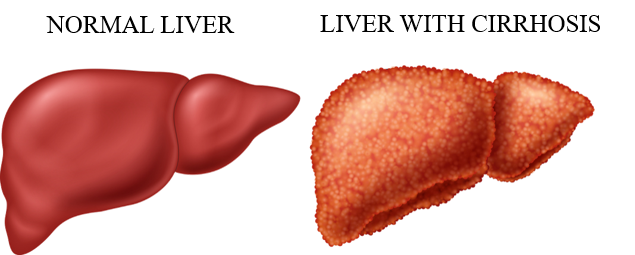
Most common causes of cirrhosis of the liver are:
- Viral hepatitis - hepatitis B and C (other viruses are very rare);
- Alcohol induced liver disease;
- Non-alcoholic steatohepatitis - a state when fat tissue starts to build into the liver tissue; the primary cause is being overweight;
- Primary biliary cholangitis;
- Primary sclerosing cholangitis;
- Autoimmune hepatitis; and
- Metabolic disorders, like Wilson's disease or hemochromatosis.
FAQs
- What does the Child Pugh Calculator do?
- The Child-Pugh calculator is a tool that facilitates the clinical assessment of the patient with liver cirrhosis. Use the calculator above for instant results in your browser.
- Is the Child Pugh Calculator free to use?
- Yes. All Try To Calculator tools are free and do not require an account.
- Are my inputs stored or sent to a server?
- No. Calculations run locally in your browser. We do not collect the numbers you enter or the results shown.
- Can I use the Child Pugh Calculator for professional decisions?
- This tool is for education and quick estimates. For medical, legal, tax, or financial decisions, verify results with a qualified professional.
- Where can I find related calculators?
- Browse more Health tools on Try To Calculator at /health, or use the related calculators section on this page.
Based on 3 sources
- Surgery and portal hypertension — Child CG, Turcotte JG
- Transection of the oesophagus for bleeding oesophageal varices — Pugh RN, Murray-Lyon IM, Dawson JL, Pietroni MC, Williams R
- Assessment of the prognosis of cirrhosis: Child–Pugh versus MELD — Durand F, Valla D
Related calculators
Vaccine queue UK
The vaccine queue calculator for the UK estimates where you are in the queue to get your COVID vaccine based on your age, health, and job.
Health
Body shape
The body shape calculator determines your body type based on bust, waist, and hip measurements.
Health
Height
This height calculator predicts a child's adult height through two distinct methods: the Khamis-Roche formula and the Mid-Parental Height formula.
Health
BMR - Harris-Benedict equation
Harris-Benedict calculator uses one of the three most popular BMR formulas. Knowing your BMR (basal metabolic weight) may help you make important decisions abou
Health