
Sine Function Calculator
Use the sine function calculator to find and calculate the value of the sin function, calculate its graph, and much more. Keep reading to learn:
- What is the sine function;
- How to plot the calculated sine function in a graph;
- The properties of the sine function;
and more!
Calculate the sine function: what is the sine function
The sine function is a fundamental trigonometric function corresponding to the vertical projection of the unitary radius of a circle when the radius is at a given angle from the horizontal axis. You can clearly visualize this definition in the image below.
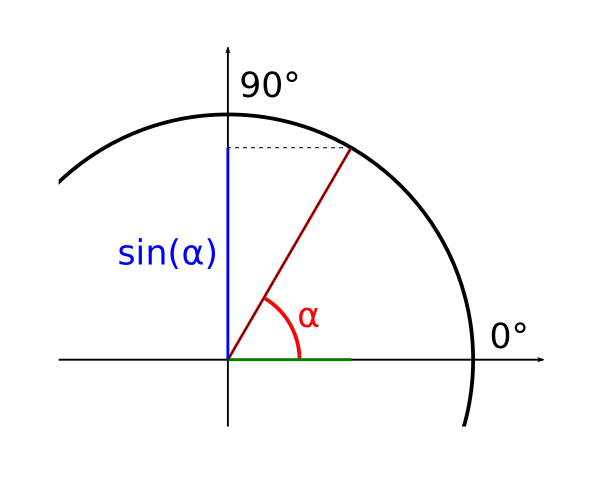
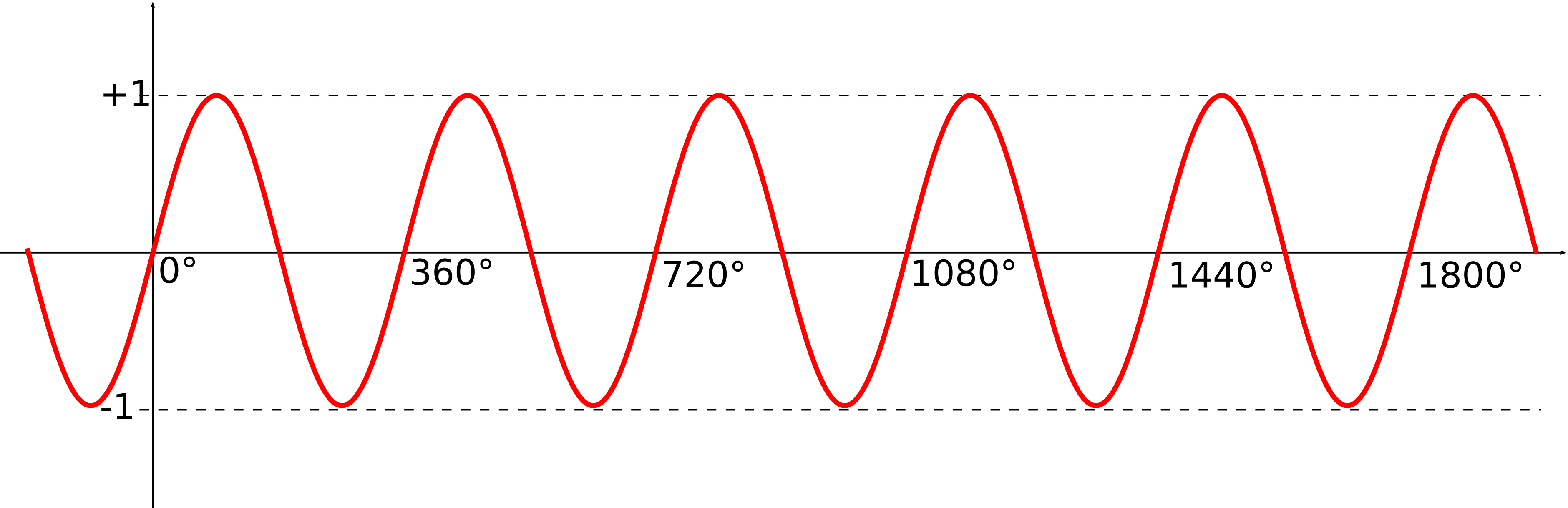
On the unit circle (i.e., with radius r=1r=1), the sine oscillates between −1−1 and +1+1: we say that the function is periodic. The function returns to the same value every 360°360°.
Calculate the graph of the sine function
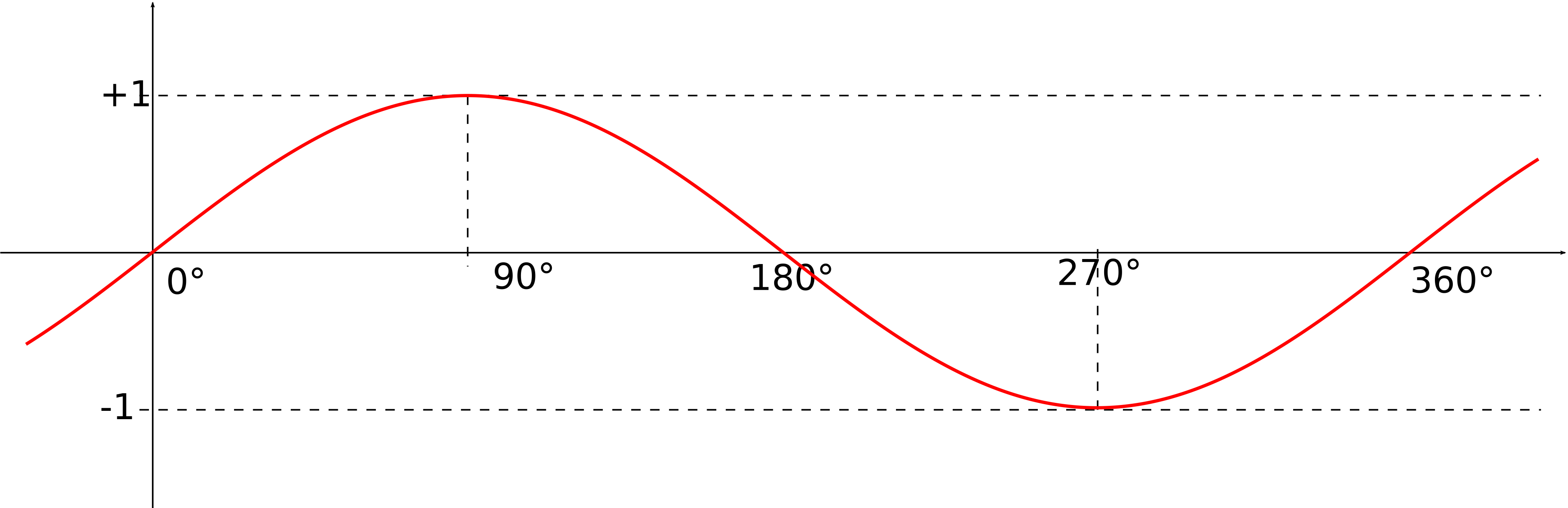
To calculate the graph of the sine function simply plug the values of the angle in the sine function calculator, and connect the points with a line. To appreciate the behavior of the sine function, start by plotting the sine function for the values 0°0°, 90°90°, 180°180°, and 360°360°.
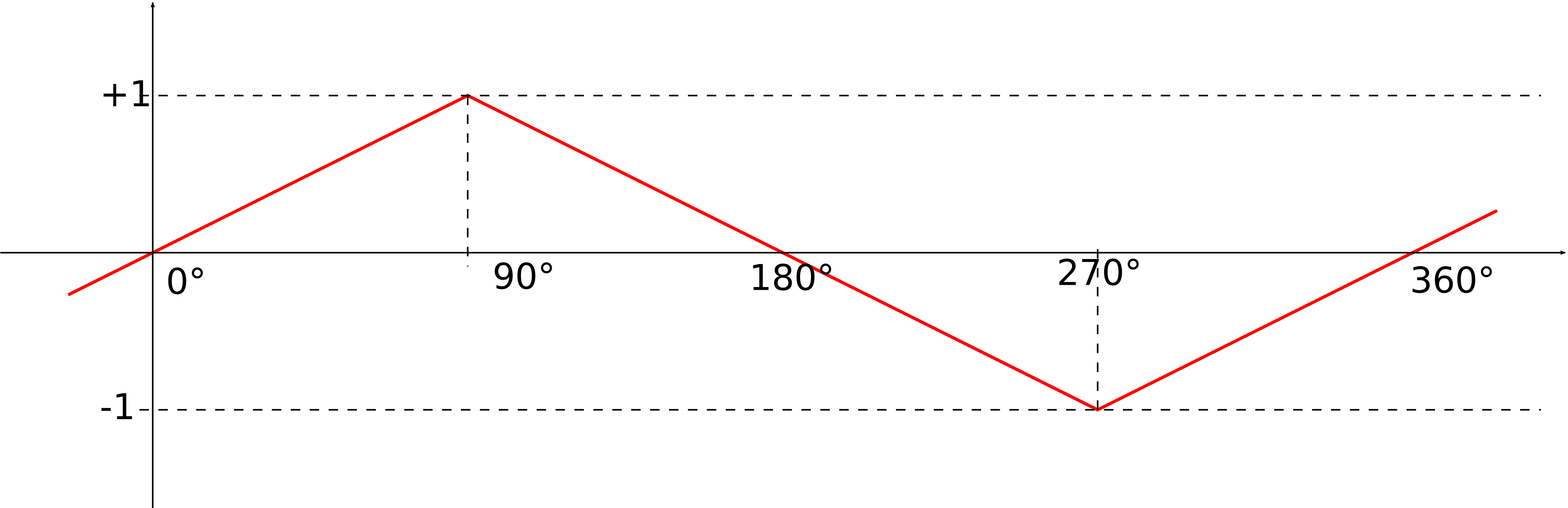
Even with just four points, you can see the oscillating behavior. Double the points by adding the multiples of 45°45°, and you'll start to see some smoothing.
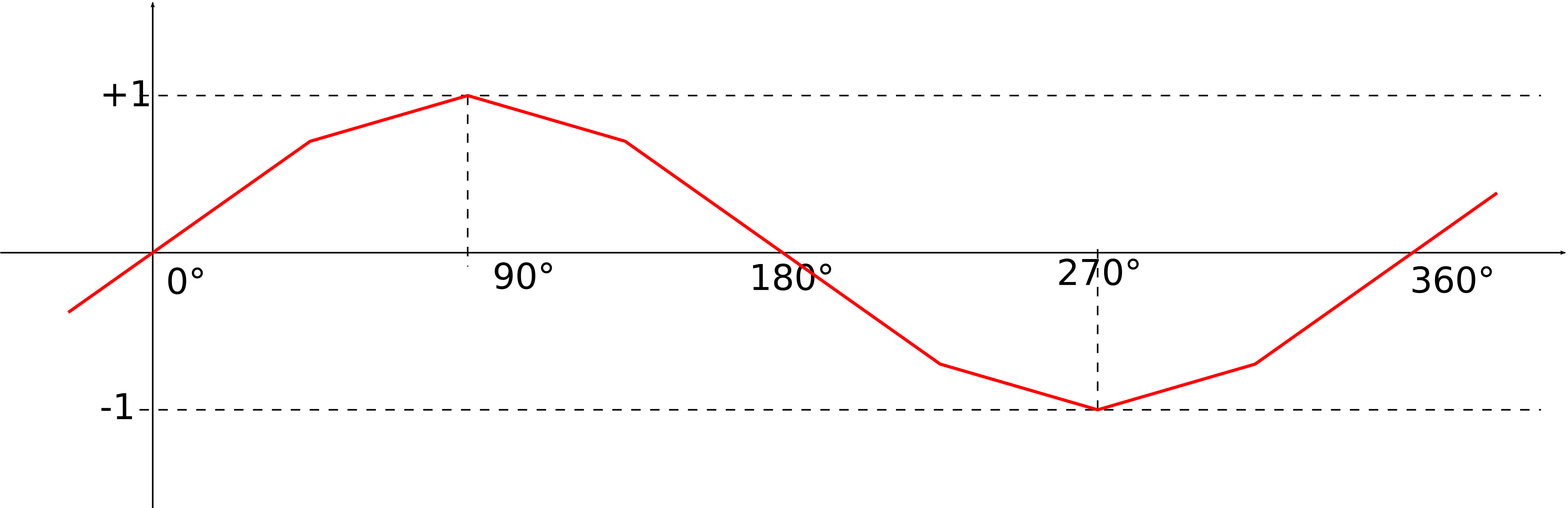
Next up, half angles of 45°45°. At this stage, from a distance, you would not notice that we are still seeing straight lines!
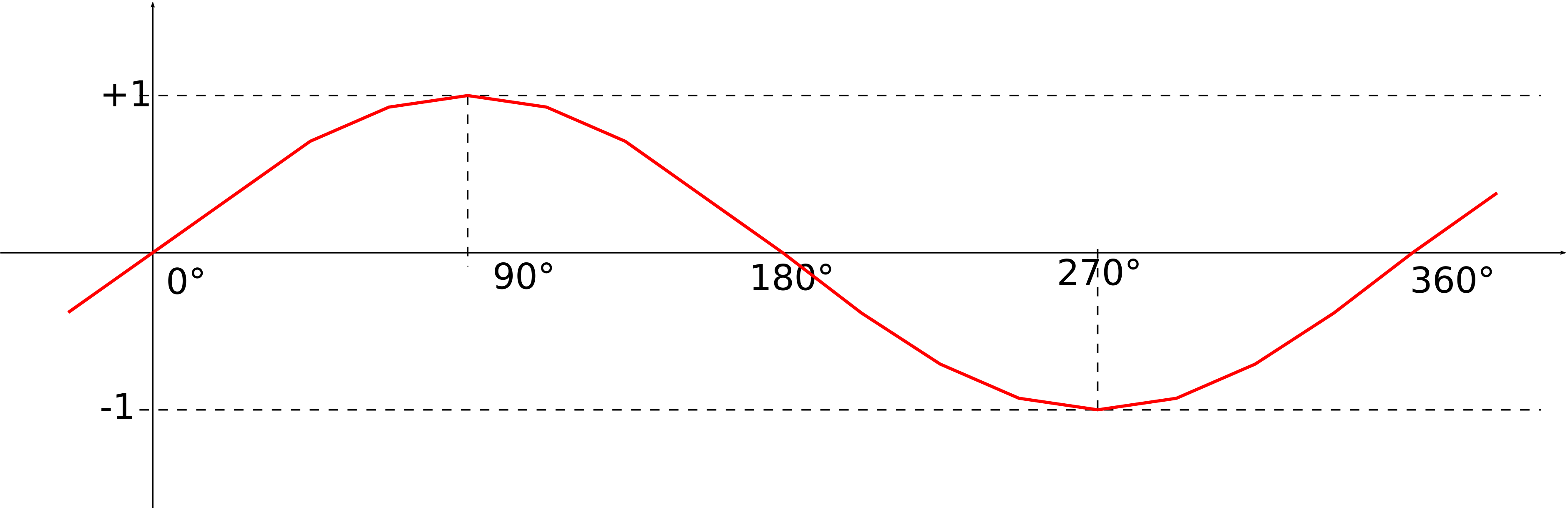
Increasing the points makes the curve smooth: finally, we calculated our sine function graph.
In the picture below, we repeated the graph of the sine function slightly more than five times: this way, you can fully appreciate the periodicity of the function.
Other calculators for the sine function
If the sine function calculator sparked your interest, visit our other tools dedicated to this trigonometric function:
- The sin calculator;
- The sin degrees calculator; and
- The sin theta calculator.
FAQs
- How do I calculate the graph of the sine function?
- To calculate the graph of the sine function follows a few simple steps: Select the angles you will use or the spacing between them. For example, if you want to plot every 45 degrees, choose: 0°, 45°, 90°, 135°, 180°, 225°, 270°, 315°, and 360°. Calculate the sine function values at these angles. In our case, we would have: 0, √2/2, 1, √2/2, 0, -√2/2, -1, -√2/2, and 0. Plot the pairs of angles and values, and connect the points. Increase the number of points to obtain a smoother curve.
- What is the periodicity of the sine function?
- The periodicity of the sine function is 360°, meaning that the values defined for the range [0,360) repeat indefinitely. You can write this property as sin(α) = sin(α +360°). This periodicity stems from the fact that the trigonometric functions are defined on a circle.
- What is the value of the sine function for the most important angles?
- For the angles 0°, 30°, 45°, 60°, and 90°, we find neat values of the sine function: sin(0°) = 0; sin(30°) = 1/2; sin(45°) = √2/2; sin(60°) = √3/2; and sin(90°) = 1. To find the following values, (120°, 135°, and so on) simply mirror the values from 1 to 0.
Related calculators
Remainder
Use the remainder calculator to find the quotient and remainder of division.
Math
Slope
Calculate the slope of a line from two given points using the slope calculator. Discover the slope formula and learn how to find a slope with two points.
Math
Average
Calculate the average (mean) with our user-friendly tool. Discover how to find averages or perform quick calculations effortlessly.
Math
Circumference
Use this free circumference calculator to find the area, circumference and diameter of a circle.
Math